
Resources
5 ways to teach kids about money
Kids don’t need a big lesson to learn about money. Small, everyday habits do most of the teaching. Here are five you can start this week.
1. Let them earn something
Money feels more real when it’s connected to effort. An extra chore or small job helps kids see how work and money fit together. Keep the jobs simple and pay what you promised. Our free printable chore chart is an easy way to start.
2. Let them make small choices
Give your child a small amount to manage and let them decide how to use it. Some choices won’t turn out well, and that’s part of it. Regretting a toy that broke is a cheap lesson now. Try not to step in unless it really matters.
3. Save for something they care about
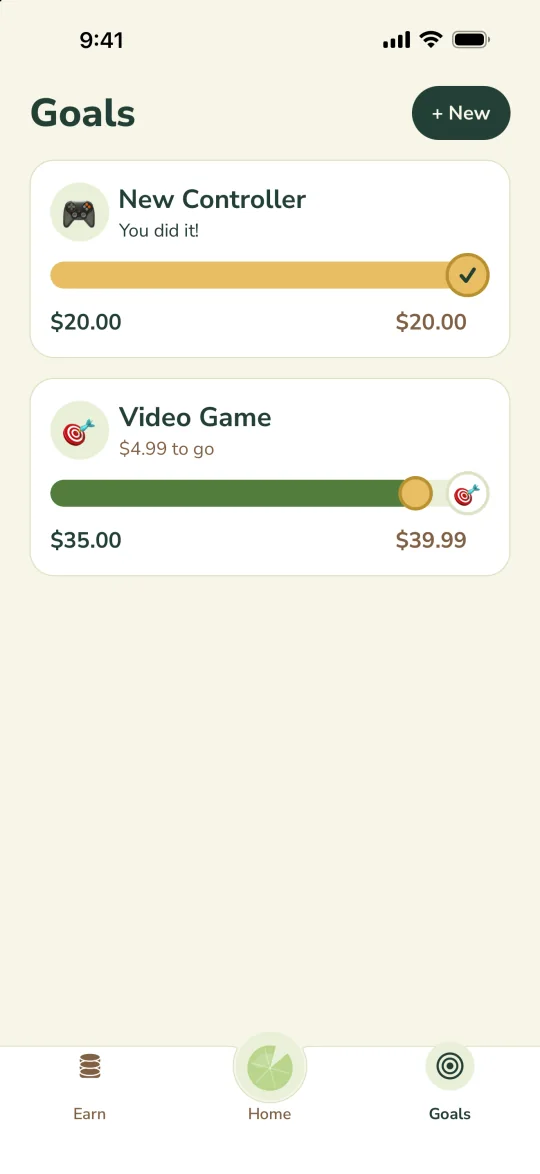
Saving is easier when there’s a goal they can picture. Let them choose it, then work out together how long it will take. Keep the first goal small, so they get to feel the win of reaching it. Then they can try a bigger one.
4. Talk about money out loud
Kids learn a lot by listening. Compare two prices at the store, or explain why you’re waiting for a sale. Everyday moments like these show that spending involves choices. You don’t need to share your whole budget for this to help.
5. Keep a record they can see
It’s hard to manage money you can’t see. Keep a simple record of what comes in, what goes out, and what’s left. A jar, a notebook, or an app can all work. What matters is that your child can check it themselves.
When should you start?
You don’t need to wait for a certain age. Start with whatever your child can follow, even if that’s just counting coins or choosing between two treats. Add more as they grow.
What to try at each age
Every child is different, so use these as rough ideas rather than rules:
- Ages 3 to 5: count coins together, name what things cost, and let them choose between two small treats. A clear jar helps, because they can see the money pile up.
- Ages 6 to 8: start a small, regular allowance and a first savings goal that takes a few weeks to reach. Let them pay at the counter themselves.
- Ages 9 to 12: hand over a real spending category, like their own snacks or game purchases, and try a longer goal that takes a couple of months.
- Teens: try a monthly schedule, a budget for something bigger like clothes, and talk about how real accounts and cards work before they have one.
A first savings goal, step by step
Say your child wants a $12 toy and gets $3 a week. Sit down together and work it out:
- Write down the goal and, if you can, add a picture of it.
- Count how many weeks it takes: $12 at $3 a week is 4 weeks.
- Mark each week as it happens, so they can see how close they are.
- When they reach it, let them buy it themselves.
If they spend some of the money along the way, show how that pushes the finish line back a week. That moment teaches more than any explanation.
Common mistakes to avoid
- Rescuing every time. If you always cover the shortfall, there’s nothing to learn from running out.
- A first goal that’s too big. A goal that takes a year is hard for a young child to stay excited about. Start with weeks, not months.
- Payments that come late or get skipped. Kids can’t learn to plan around money that doesn’t show up when promised.
- Only talking about money when something goes wrong. Mention the good choices too, like waiting for a sale or reaching a goal.
Needs, wants, and giving
Once your child is making a few choices of their own, you can add two more ideas. The first is the difference between needs and wants. Sort a few things together, like shoes, a snack, and a toy, and talk about why some are easier to skip than others. There’s rarely one right answer, and that’s the point.
The second is giving. Some families set aside a small part of each allowance, such as $1 out of $5, for a gift, a donation, or helping someone they know. Let your child choose where it goes. It shows that money can do good for other people, not only buy things for themselves.
Is a virtual balance as good as cash?
Both have a place. Young children often understand money best when they can hold coins and see a jar fill up. As they get older, most of the money they’ll ever handle is a number on a screen, so practicing with a balance they can check is useful too. Many families mix the two: keep the record in one place, and use cash when it’s time to buy something.
Thinking about a regular allowance? Read how much allowance kids should get.
Put it into practice
FroggyFunds is our family chores and allowance app. Kids earn, save toward goals, and watch their balance grow while you stay in charge. No real money moves through the app. It’s free to try for 1 child and 1 parent with balance and activity. Chores, allowance, and goals are part of a one-time $19.99 US unlock, with no subscription.